
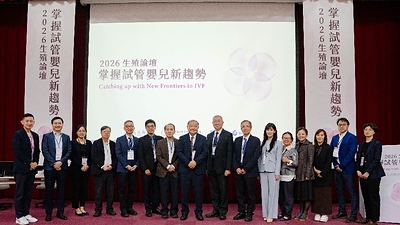
TAIPEI, Nov. 26, 2026 /PRNewswire/ — NUWA Healthcare, in collaboration with the Institute of Biotechnology at National Taiwan University (NTU), recently hosted the 2026 NUWA Reproductive Medicine Forum, themed “Catching Up with New Frontiers in IVF.” The event brought together approximately 250 physicians, embryologists, and counselors from 65 fertility centers across Taiwan, focusing on the latest advances in preimplantation genetic testing for aneuploidy (PGT-A), embryo biopsy techniques, and emerging applications of oral medications in in vitro fertilization (IVF).
Advancing PGT-A Quality and Clinical Interpretation
PGT-A may support embryo transfer decisions following individualized clinical assessment, particularly for women aged 35 and older, as well as patients experiencing repeated implantation failures or recurrent pregnancy loss. For patients with a family history of monogenic disorders, preimplantation genetic testing for monogenic disorders (PGT-M) may also be considered.
Dr. Chih-Hung Liu, Chief Medical Advisor of NUWA Healthcare and the forum convener for the fourth consecutive year, explained that PGT-A primarily helps identify embryos that may be less suitable for transfer, allowing clinicians to prioritize embryo selection. This can help reduce unnecessary embryo transfers, lower associated treatment costs, and minimize the risk of patients discontinuing treatment prematurely after repeated unsuccessful attempts.
The Taiwanese Society for Reproductive Medicine (TSRM) has developed relevant guidelines to support informed discussions between physicians and patients regarding PGT-A.
Dr. Liu emphasized that appropriate medication protocols, optimal embryo culture conditions, precise biopsy techniques, and accurate testing platforms are all essential to achieving the intended benefits of PGT-A. Improving testing accuracy and genetic counseling is particularly important to avoid inadvertently excluding embryos with reproductive potential.
Dr. Chih-Ting Chang, NUWA Fertility Center’s attending physician, noted that some embryos classified as having segmental aneuploidy may retain reproductive potential. Certain studies have reported concordance rates of approximately 30% to 50% following repeat biopsies, suggesting that a single biopsy may not fully represent the chromosomal status of the entire embryo. Individualized genetic counseling therefore remains essential.
Evidence-Based PGT-A Interpretation and Embryo Biopsy Quality
U.S.-based genetic counseling expert, Emily L. Mounts, shared insights into the clinical validation of next-generation PGT-A platforms and evidence-based genetic counseling.
Mosaic findings may reflect chromosomal differences among embryonic cells or be influenced by sampling variability and technical noise. As classification criteria and clinical validation methods vary across platforms, physicians should clearly communicate these differences to patients.
Li-Jung Chang, Laboratory Director at USOON Fertility Center, highlighted the importance of embryo biopsy and sample handling. Appropriate biopsy timing, cell collection, sample washing, preservation, and identity verification are essential to minimizing potential embryo damage, DNA contamination, and sample mix-ups while ensuring reliable testing results.
Oral GnRH Antagonists May Reduce Injection Burden in IVF
Fear of injections remains a barrier for some patients seeking fertility treatment. Recent advances in oral gonadotropin-releasing hormone (GnRH) antagonists, already used in the treatment of conditions such as endometriosis and uterine fibroids, may offer new possibilities for IVF treatments in the future.
Dr. Chien-Jung Huang, Clinic Director of Taipei’s IVF Fertility Clinic, presented recent developments in oral GnRH antagonists, which offer an alternative route of administration and are less expensive.
Early clinical use has demonstrated their effective suppressive action, offering the potential to reduce the number of injections required and alleviate the treatment burden on patients.
NUWA Healthcare and NTU Strengthen Taiwan’s Reproductive Medicine Capabilities
Dr. Hsien-Ming Wu, President of TSRM, commended NUWA Healthcare’s annual forum for advancing clinical practice through expert knowledge-sharing and interdisciplinary collaboration. Since 2023, the forum has addressed key topics including immunotherapy, natural ovulatory cycle embryo transfer, ovarian stimulation strategies, PGT-A, and emerging embryology laboratory technologies.
Professor Li-Ying Sung of NTU’s Institute of Biotechnology highlighted the five-year academic-industry partnership between NTU and NUWA Healthcare to cultivate embryologists. Supported by a talent development program under Taiwan’s Ministry of Education in 2024, the initiative aims to strengthen Taiwan’s international competitiveness in reproductive biotechnology.
Dr. Liu emphasized that progress in reproductive medicine lies not only in technological breakthroughs but also in translating scientific discoveries into meaningful treatment options for patients. Openly sharing clinical experience and effective treatment strategies enables fertility centers to advance together and deliver greater benefits to patients.
Now in its fourth consecutive year, the NUWA Reproductive Medicine Forum continues to bring together domestic and international experts to address clinical challenges. NUWA Healthcare remains committed to connecting clinical, academic, and industry resources, fostering collaboration, and strengthening Taiwan’s role as a leading force in reproductive medicine across Asia.
 View original content to download multimedia:https://www.prnewswire.com/apac/news-releases/taiwans-reproductive-medicine-experts-gather-at-the-nuwa-reproductive-forum-to-shape-the-future-of-ivf-302951162.html
SOURCE NUWA Healthcare
