CAMBRIDGE, Mass., Oct. 14, 2026 /PRNewswire/ — In a key step for decarbonization of the cement and concrete sector, today Urban Mining Industries and S3 Markets announce the issuance of Environmental Attribute Certificates (EACs) for Urban Mining’s Pozzotive® product. These are the world’s first EACs issued for a supplementary cementitious material (SCM).
The cement and concrete sector contributes 8% of the world’s carbon emissions, with significant growth in demand expected. A critical technology for decarbonizing this sector are SCMs, which are used to partially replace clinker, the most carbon intensive component of cement and concrete.
SCMs typically have a low carbon footprint and are cost-effective and energy-efficient to produce. The IEA places SCM use as the single largest near-term decarbonization lever for cement for its 1.5C Net Zero Emissions Scenario [1].
Most SCMs used today are either fly ash from coal power plants, or ground granulated slag from blast furnaces that produce iron. The supply of both is expected to decrease over time as coal plants close and iron production shifts to more sustainable processes. At current cement, slag, and ash consumption levels, this will require the additional production of roughly 20 million tons of SCM per year for the United States alone [2]. There is therefore an urgent need to scale the production of novel SCMs for the net-zero transition.
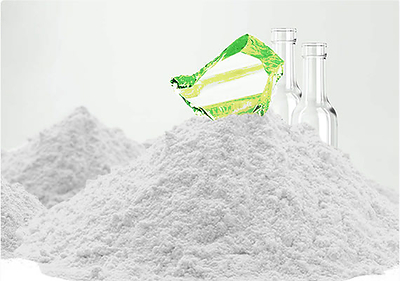
Urban Mining’s Pozzotive® is a novel pozzolan and SCM made from ground glass that would have otherwise been landfilled. The SCM has a carbon footprint that is 93% lower than the cement it replaces in a concrete mix. As a pozzolan, it brings substantial co-benefits such as improving the strength and durability of the concrete which extends asset service life, and helping to improve circularity by avoiding waste glass going to landfill.
A key barrier for scaling Pozzotive – and other novel SCMs – is the structure of the cement market. It is a spot market, which means there is significant revenue uncertainty for new SCM production projects. This can make it difficult to attract investors. Furthermore, willing buyers of low-carbon SCMs may need the material in distant geographies, where transportation is cost-prohibitive and the carbon benefits are eroded by freight emissions.
EACs can play an essential role in scaling novel SCMs. They do this by separating a physical product from its environmental attributes such as its carbon intensity. The EACs can then be transferred to buyers through a book-and-claim chain of custody. For buyers, this means a more scalable way to reach climate targets. For producers, long-term revenue from EAC agreements can help attract financing and improve economic viability, thus accelerating low-carbon production.
Genevieve Rose Sherman, CEO of Concrete Transition Capital, said: “CTC is excited to see EACs coming to market for novel SCMs, many of which may be lower cost and can create a wider range of EAC pricing and help grow the pool of prospective buyers.” [3]
To maximize their positive impact, EACs must be issued in a high-integrity manner. S3 Markets and Urban Mining have followed a conservative, high-integrity, and transparent process detailed here based on best practices in EAC markets. The issuance process measures and accounts for the effect a given SCM has on a concrete mix’s strength, as well as the potential SCM replacement rates. S3 Markets and Urban Mining are committed to aligning this approach where possible with emerging EAC Standards for SCMs to ensure market consistency.
Overall, SCMs are a critical part of the decarbonization pathway for cement and concrete. There is an urgent need to scale novel SCMs, and EACs will play a central role in helping to achieve this. Urban Mining and S3 Markets are leading the way with a high-integrity EAC issuance process that promises to catalyze broader decarbonization for the sector.
References
[1] Net Zero Roadmap – IEA https://www.iea.org/reports/net-zero-roadmap-a-global-pathway-to-keep-the-15-c-goal-in-reach. Based on reduction of clinker-to-cement ratio, see also: Technology Roadmap: Low-Carbon Transition in the Cement Industry – IEA https://iea.blob.core.windows.net/assets/cbaa3da1-fd61-4c2a-8719-31538f59b54f/TechnologyRoadmapLowCarbonTransitionintheCementIndustry.pdf.
[2] Low-Carbon Cement Liftoff Report – US DOE https://web.archive.org/web/20250305024603/https://liftoff.energy.gov/wp-content/uploads/2023/12/LIFTOFF_Cement_Updated-2.6.25.pdf
[3] Concrete Transition Capital (CTC) is an investment platform focused on financing the scale-up of low-emission cement and concrete.
About Urban Mining
Urban Mining Industries is a climate technology company focused on low-carbon, circular construction materials. Its flagship product, Pozzotive®, is a ground-glass pozzolan made from post-consumer recycled glass that replaces a portion of cement in concrete, reducing embodied CO₂ while diverting glass from landfill. Learn more at www.pozzotive.com.
About S3 Markets
S3 Markets builds market infrastructure for Environmental Attribute Certificates (EACs) tied to low-carbon commodities. Its EAC lifecycle management system helps producers scale and enables buyers to address Scope 3 decarbonization opportunities across commodities such as cement & concrete, ammonia, steel, copper, trucking, and other industrial materials. Learn more at www.s3markets.com/
Contact:
Saman Baghestani
(214) 699-8220
424454@email4pr.com
 View original content to download multimedia:https://www.prnewswire.com/news-releases/urban-mining-industries-and-s3-markets-launch-worlds-first-scm-environmental-attribute-certificates-to-help-accelerate-cement-and-concrete-decarbonization-302907987.html
SOURCE Urban Mining Industries and S3 Markets